

The Clubhouse Method™ · Why it works
They learn the skills in class. Recess is where they practice.
Grounded in special education and school psychology practice, aligned to the standards your school already uses, and measured with real data from your own recess.
Become a founding schoolSee the research- Fully cleared and insured
- No class time
- No teacher prep
- Real data
The approach
Practice in the real moment, with support that fades.
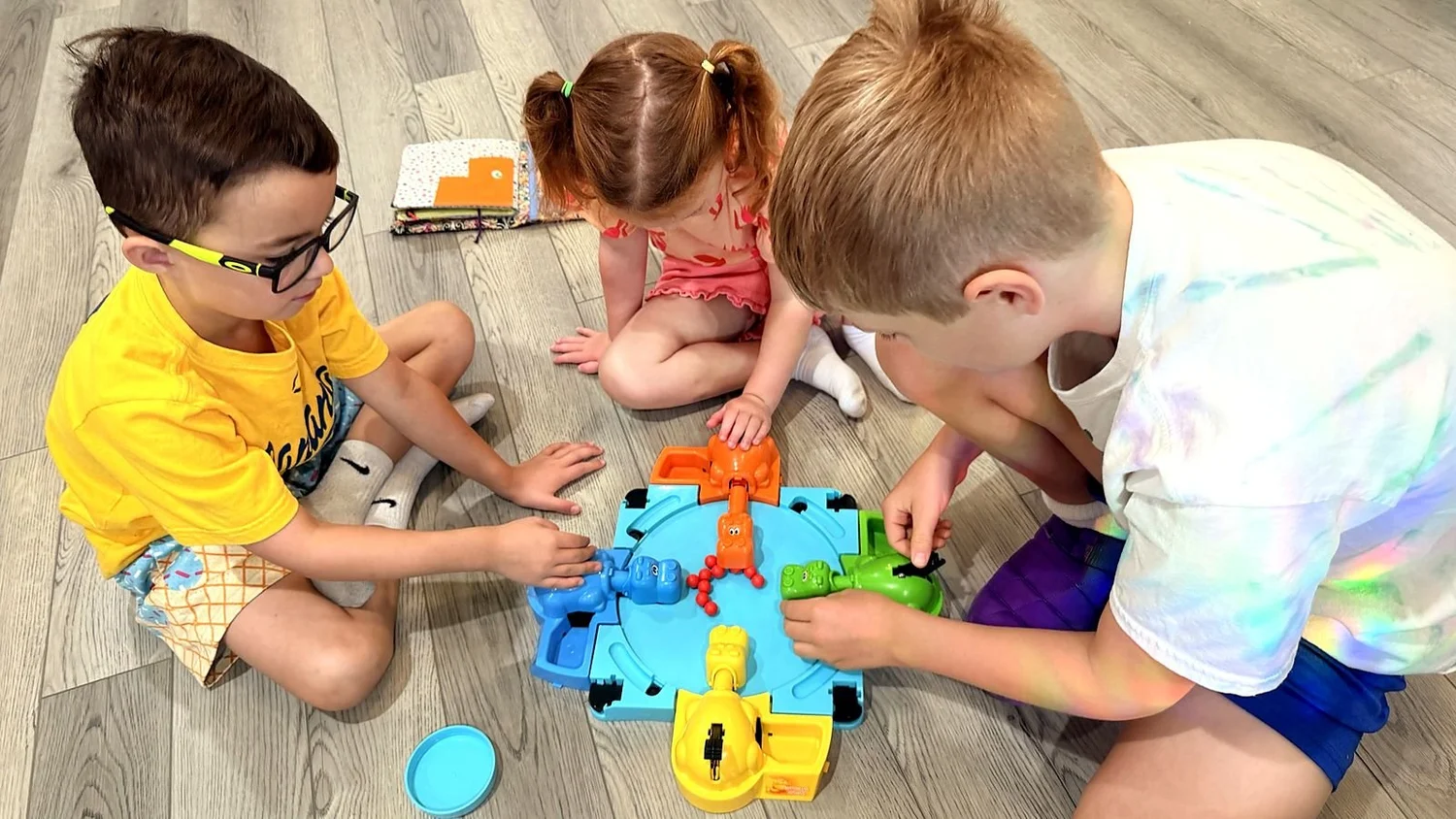
Kids rarely struggle because they don't care. They're missing a skill, or the words, at the moment they need them. Instead of just monitoring behavior, trained staff help kids join in, model the words and coach them through frustration.
Modeling
One skill a week, modeled the same simple way every time.
Fading support
Kids try their own fix first. Staff step in only as needed.
Real settings
Skills are practiced where they're used, so they carry back to class.
Carry it over
Aides, teachers and families get the same words all week.
The goal isn't to stop every disagreement. It's to help kids handle those moments on their own over time.
The research
The adults at recess make the difference.
It isn't just whether kids get recess. It's what happens there, and who's with them.
Alignment
Fits what your school already does.
Nothing to replace. It completes the work you're already doing.
Go deeper
The long view and how we measure.
Tap any topic to open it.
01Why early mattersSkills built at recess now show up for years
Being surrounded by people can still feel lonely. We help bridge that gap, one invitation at a time.
02How we measureData from your own recess, never labels
Every pilot starts with goals agreed with you and a baseline. We track peer conflicts, how often children work problems out on their own and how quickly classes settle after recess, all at the class level. You receive a halfway check-in and a written results report.
We're honest about where we are: The Clubhouse Method is research-based and in its first school pilots, with an independent evaluation planned with a university partner.
03Recess and SEL todayTime is short, and schools feel it
04The pandemic gapWhy so many schools are feeling it now
Spring 2027 · Founding Schools
Be first.
A small group of founding schools will launch The Clubhouse Method this spring and set the standard for what recess can be. 10 weeks, February to April, with data before, during and after.
Become a founding schoolStarts with a free call and demo recess. Sign by January 15.
Let's talk
Social skills aren't just taught. They're practiced.
A 15-minute call, then a free demo recess. No cost, no commitment.
Become a founding schoolFree demo recessQuestions? 610-390-2873 or nweirich@theclubhousewc.com
Sources
Sources
- National Center for Education Statistics. (2024, April 16). Most schools report some concern about students meeting academic standards and issues related to staffing shortages [Press release]. School Pulse Panel, 2023–24 school year. ies.ed.gov
- National Center for Education Statistics. (2024, July 18). About one-quarter of public schools reported that lack of focus or inattention from students had a severe negative impact on learning in 2023–24 [Press release]. School Pulse Panel, May 2024. nces.ed.gov
- Tsai, M. M., Olarte, D. A., Hager, E. R., Cohen, J. F. W., & Turner, L. (2024). Prevalence of recess and supportive practices at a nationwide sample of public elementary schools in the United States. Journal of School Health, 94(4), 366–373. 559 schools; data collected 2019–20. doi.org
- National Center for Education Statistics. (2024, October 17). Most U.S. public elementary and secondary schools faced hiring challenges for the start of the 2024–25 academic year [Press release]. School Pulse Panel. nces.ed.gov
- Arnold, J. P., Stellino, M. B., Özkoca, N., Belcher, D. J., & Massey, W. V. (2025). The role of adult support in mitigating students' feelings of unwelcomeness at recess. Journal of School Health. 483 elementary students, four time points across one school year. doi.org
- American Academy of Pediatrics. (2026, May 13). Updated policy statement on recess in school. Pediatrics. First new AAP recess guidance in 13 years. doi.org
- Ha, C., McCarthy, M. F., Strambler, M. J., & Cipriano, C. (2025). Disentangling the effects of social and emotional learning programs on student academic achievement across grades 1–12: A systematic review and meta-analysis. Review of Educational Research. 40 studies, 33,700+ students. doi.org
- World Health Organization. (2025, June 30). Social connection linked to improved health and reduced risk of early death [News release]. Report of the WHO Commission on Social Connection. www.who.int
- Stephens, C. P. (2024, October 8). Students feel less connected to school. Here's why that matters. Education Week. CDC Youth Risk Behavior Survey, 2021 and 2023. www.edweek.org
- Zablotsky, B., Arockiaraj, B., Haile, G., & Ng, A. E. (2024, October). Daily screen time among teenagers: United States, July 2021–December 2023 (NCHS Data Brief No. 513). National Center for Health Statistics. www.cdc.gov
- Heubeck, E. (2025, November 19). Do students get enough recess? What teachers think. Education Week. EdWeek Research Center survey of 464 teachers. www.edweek.org
- Centers for Disease Control and Prevention. (2024, July 1). Recess. Physical Activity Education. www.cdc.gov
- Blad, E. (2026, August 3). 75% of educators expect student behavior to be a challenge this year. What else? Education Week. EdWeek Research Center survey of 1,000+ teachers and school and district leaders, April–June 2026. www.edweek.org
- Mader, J. (2026, February 17). Biting, kicking, wandering the classroom: Teachers say there's a rise in misbehavior even among the littlest kids. The Hechinger Report. Reports NCES School Pulse Panel data, 2022–2025. hechingerreport.org